So online stores tuned everything to that behavior: navigation, design, SEO and the way they present products.
Today that assumption is no longer quite safe.
More and more people start a purchase with a question to an AI assistant. They no longer open several stores and browse dozens of products. They ask instead: “Find me wireless headphones under 150 euros with a good mic that connects to two devices at once.”
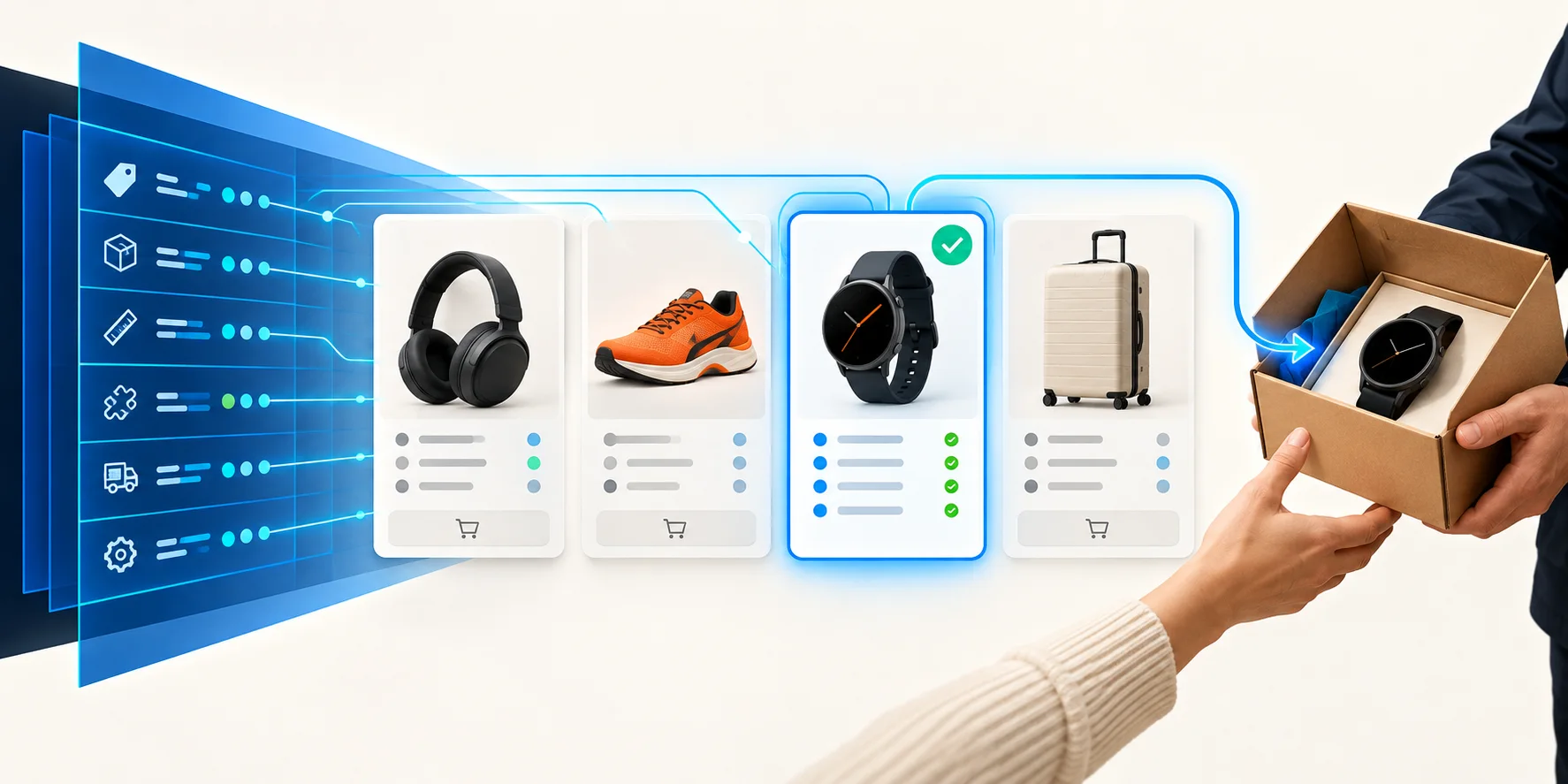
AI can find matching products, compare features, check price and availability and narrow the choice down to a few options. With some platforms and sellers, it goes further, all the way to the purchase itself.
At that moment, a new middleman steps in between the buyer and the store. And it does not use the internet the way a person does.
Shopping is slowly moving out of the online store
The largest e-commerce and tech platforms already show the change.
During 2026, Shopify greatly expanded its infrastructure for agentic commerce, where an AI agent helps find and buy products. Shopify merchants can appear in AI channels such as ChatGPT, Google AI Mode, Gemini and Microsoft Copilot. Structured product data lets those systems understand what a store sells.
OpenAI developed the Agentic Commerce Protocol. Through it, sellers send structured product data and let an AI system work with the cart and checkout. With supported sellers, buyers no longer have to go from a Google search to a product page and a checkout on the store's site.
For the average buyer, the technology behind all this does not matter much. They want a good recommendation and a purchase in as few steps as possible.
For the owner of an online store, the change matters a lot more.
A product can now be found, analyzed and bought without anyone browsing the site. So a new question comes up: what does an online store have to give an AI system so that the system understands it correctly?
AI does not look at a product the way a buyer does
When a person opens a product page, they understand a lot from context.
The photo shows what the product looks like. The title, the price, the layout and a few highlighted features often give a quick sense of what is for sale.
An AI agent relies much more on structured information.
Imagine someone wants road running shoes in size 44, under a set budget and with specific features. The system must find that data reliably. The same goes for color, material, dimensions, stock, delivery time, available variants, price and many other attributes.
That is why product data quality matters even more now.
A description like “a premium model of top quality that delivers a unique experience” can sound nice in marketing copy. It tells almost nothing to a system that tries to check whether the product meets a buyer's specific needs.
Precisely defined attributes, clear categories, product variants and up-to-date data become much more valuable.
OpenAI's documentation for merchants asks for exactly this kind of structured data. It lists product IDs, descriptions, prices, stock levels, photos and shipping options, and it asks merchants to refresh them regularly.
What happens to SEO?
SEO will not disappear because of this. But the way people find products already reaches beyond the classic Google search.
Until now, one of the main goals of an online store was to rank a product high when a user types a certain phrase. When AI does the shopping, the user can ask for something far more complex.
For example:
I need a TV between 55 and 65 inches for a very bright living room. I mostly watch sports, my budget is 1,000 euros at most, and the model must be less than two years old.
That is not a classic keyword anymore.
The AI must understand the requirements, find products that meet them, judge how relevant its information is and finally decide what to show the user.
So product data must also make sense to the machines that process it.
Much of this builds on GEO (generative engine optimization), a practice that grew over the past few years. GEO content aims to rank in search results and also to let AI systems read it correctly and cite it as a source.
In e-commerce, the stakes are more concrete. A misread piece of information can directly affect a purchase.
An online store is more than what you see on the screen
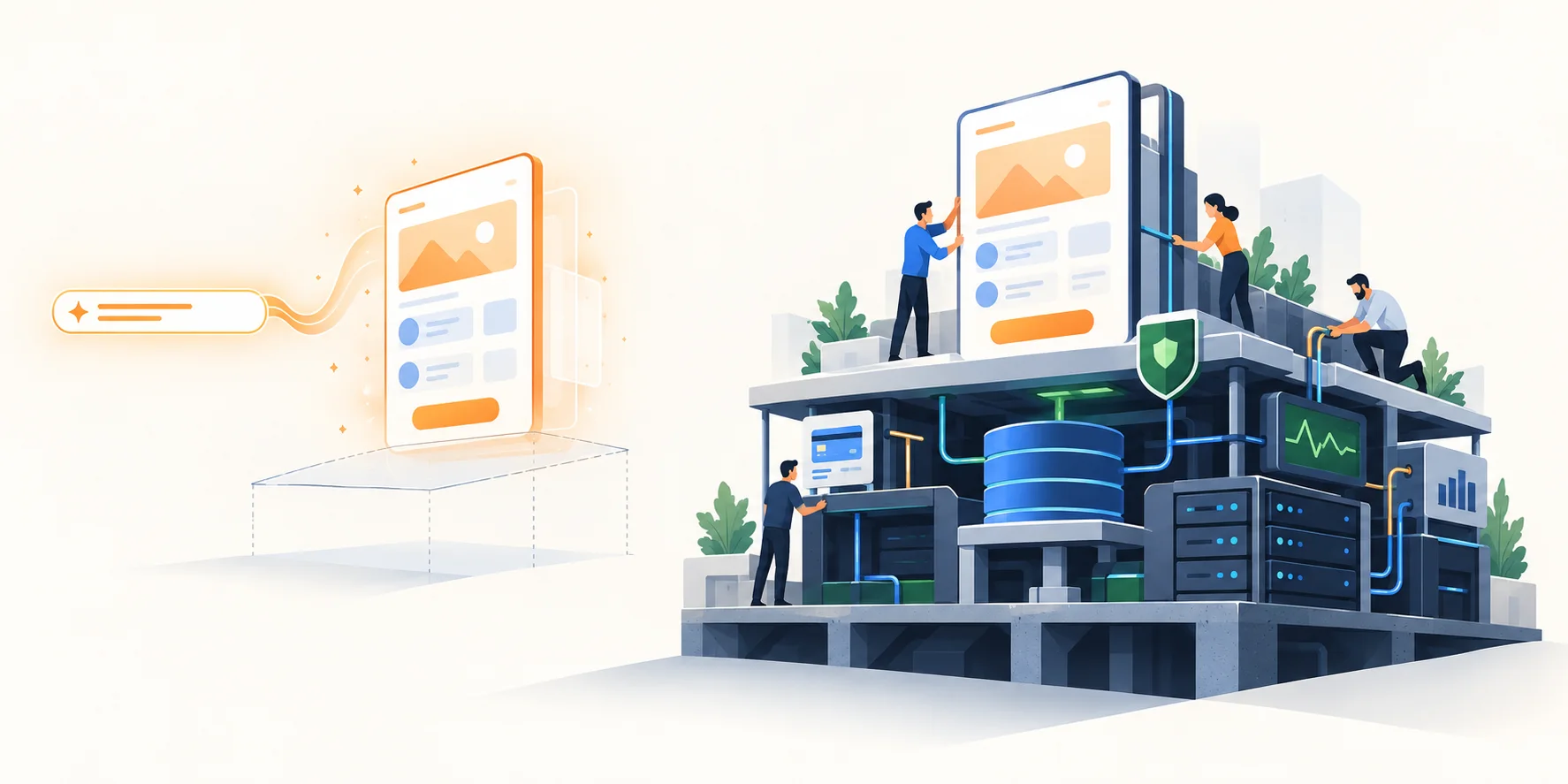
This shift puts more weight on something that has long mattered in e-commerce development: the storefront is only one part of the system.
The buyer sees the design, the navigation, the photos, the filters and the checkout. Behind them sit the catalog, stock, prices, promotions, customer data, payments, delivery, the ERP and various integrations.
Once an AI agent joins the process, the quality of that back-end infrastructure matters even more.
The agent must get accurate information about whether a product is in stock right now. The price it receives must match the price the user will pay. If a product comes in several sizes or colors, the agent must know which combinations exist. If a shipping method does not work for some location, the system must pass that on correctly.
Otherwise the user can get a very good recommendation for a product they cannot actually buy.
So APIs, integration quality and the way systems exchange data will shape the shopping experience more and more. The buyer will never see most of that process.
In this setting, a headless approach makes even more sense
In a traditional online store, the back end and what the user sees are often tightly linked. Headless and composable approaches have tried to separate those layers for years, so that one commerce system can serve different channels.
Until now, those channels were usually a website, a mobile app, a physical store or another sales platform.
Now one more channel appears: the AI agent.
If the product catalog, cart, customer accounts, prices and checkout are available through well-defined APIs, a new interface can use them with much less work. It makes no difference whether that interface is a classic online store, a mobile app or a chat with an AI assistant.
That is why protocols such as UCP and ACP are appearing now. Their goal is to standardize how AI agents talk to merchants. Shopify developed UCP together with Google, and a wider group of large e-commerce and tech companies has announced support for that direction.
That does not mean every online store must rush to add agentic checkout today. It matters much more to understand where the infrastructure is heading.
Will people still need an online store at all?
Yes, but its role will not always stay the same.
People want to explore some products: see them in different variants, read the brand story or just look through the range. In fashion, luxury goods, interior design and many other categories, the visual experience plays a huge role. It is hard to reduce it to a few parameters.
On the other hand, many purchases are about finding the right product as fast as possible.
Say you need toner for one printer model, a spare part, a charger or a device with exact specs. Ten different stores to browse through is probably not an experience you want to keep.
Here an AI agent brings very clear value.
So it is more realistic to expect part of shopping to move into AI interfaces. The online store will stay an important part of the brand, the content and the sales system.
What do online stores need to do today?
For most companies, there is no need right now to panic and redesign the online store because of AI agents.
It is much more useful to check the foundations.
- Is the product data complete and consistent?
- Are attributes and variants clearly defined?
- Are price and stock up to date on every channel?
- Can other systems fetch products reliably through an API?
- Are the ERP, the online store and the other systems well connected?
- Does the product content really explain what the product is and who it is for?
All of these mattered before AI shopping appeared.
The difference is that a poorly structured catalog will no longer hurt only the person who tries to find a product on the site. It can also make it hard for an AI system to understand the product, recommend it and include it in a purchase.
In the first quarter of 2026, Shopify saw traffic and orders from AI search grow several times over. So this channel is no longer an experiment that lives only in the labs of tech companies.
We are still at the beginning. It is hard to predict how fast people will accept AI doing a larger share of their shopping. But the platforms already move in a direction clear enough that e-commerce companies cannot afford to ignore it.
An online store built today will probably stay in use for years. During that time, the way buyers reach products can change a great deal.
So a good e-commerce system must work for two cases. One is the user who wants to spend half an hour browsing products. The other is an AI agent that scans the same catalog in a few seconds to find the best answer to a very specific request.
In both cases, the goal stays the same: the buyer gets accurate information and finds the right product. The only change is who reads the store's data first.