So a fair question comes up more and more often: if AI can build an app, why does a company still pay for software development?
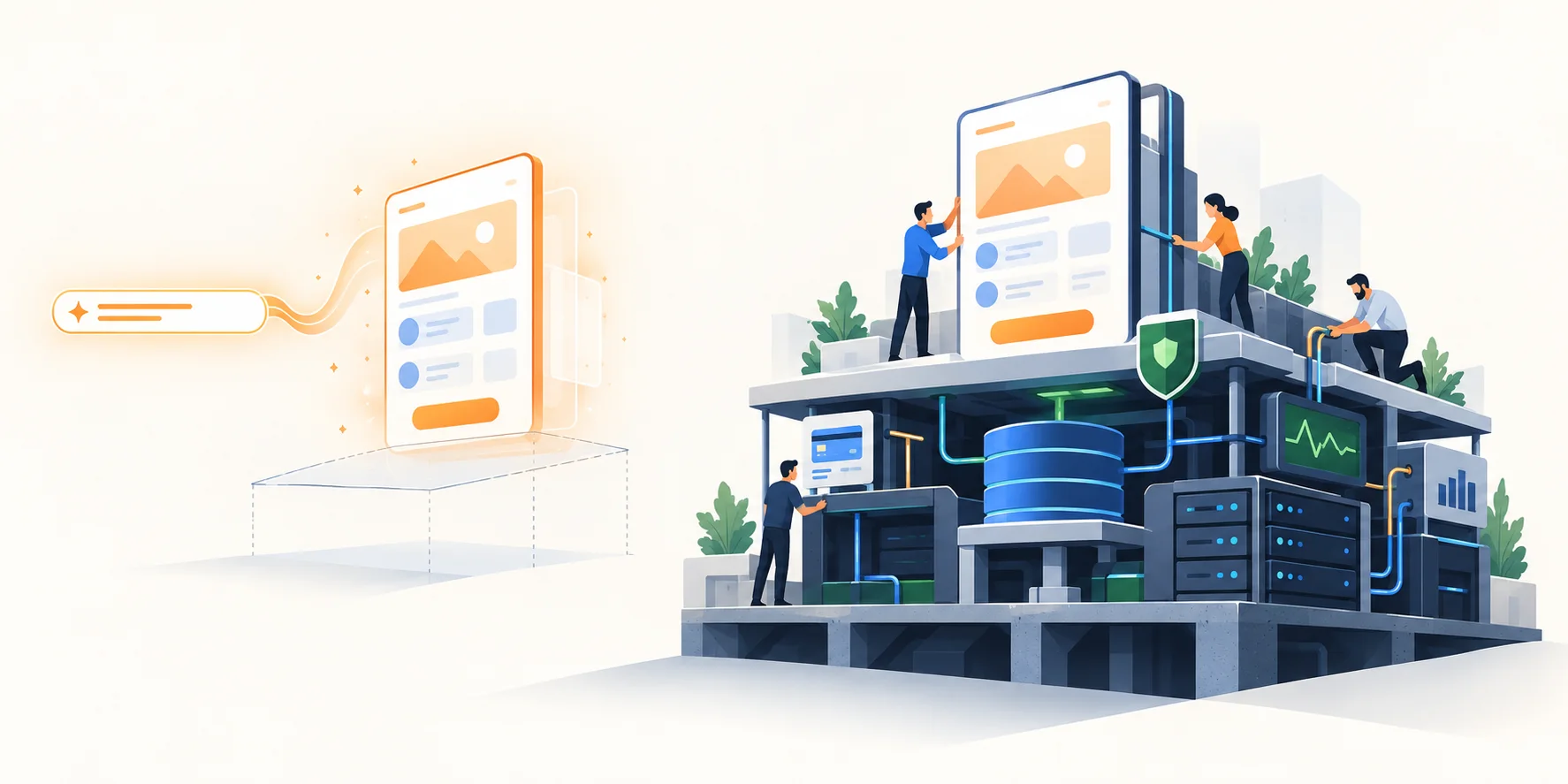
The answer lies mostly in one difference. An app can work under controlled conditions. A product has to work every day, with real users, real data and real consequences when something goes wrong.
AI has changed how software gets built
AI tools already have a visible effect on software development. Developers use them to write parts of the code, find bugs, generate tests, write documentation and finish tasks that used to take hours. At the same time, new tools let people with little technical experience build simple apps from text instructions.
The shift is real, and ignoring it makes little sense. Work that took hours now takes minutes, and the first prototype of a product often appears much sooner than before.
The trouble starts when people mistake the first result for a finished product.
An app can have a well-designed interface, user sign-up, a few features and a database. Behind all that, it can still hide serious problems that nobody sees at first glance.
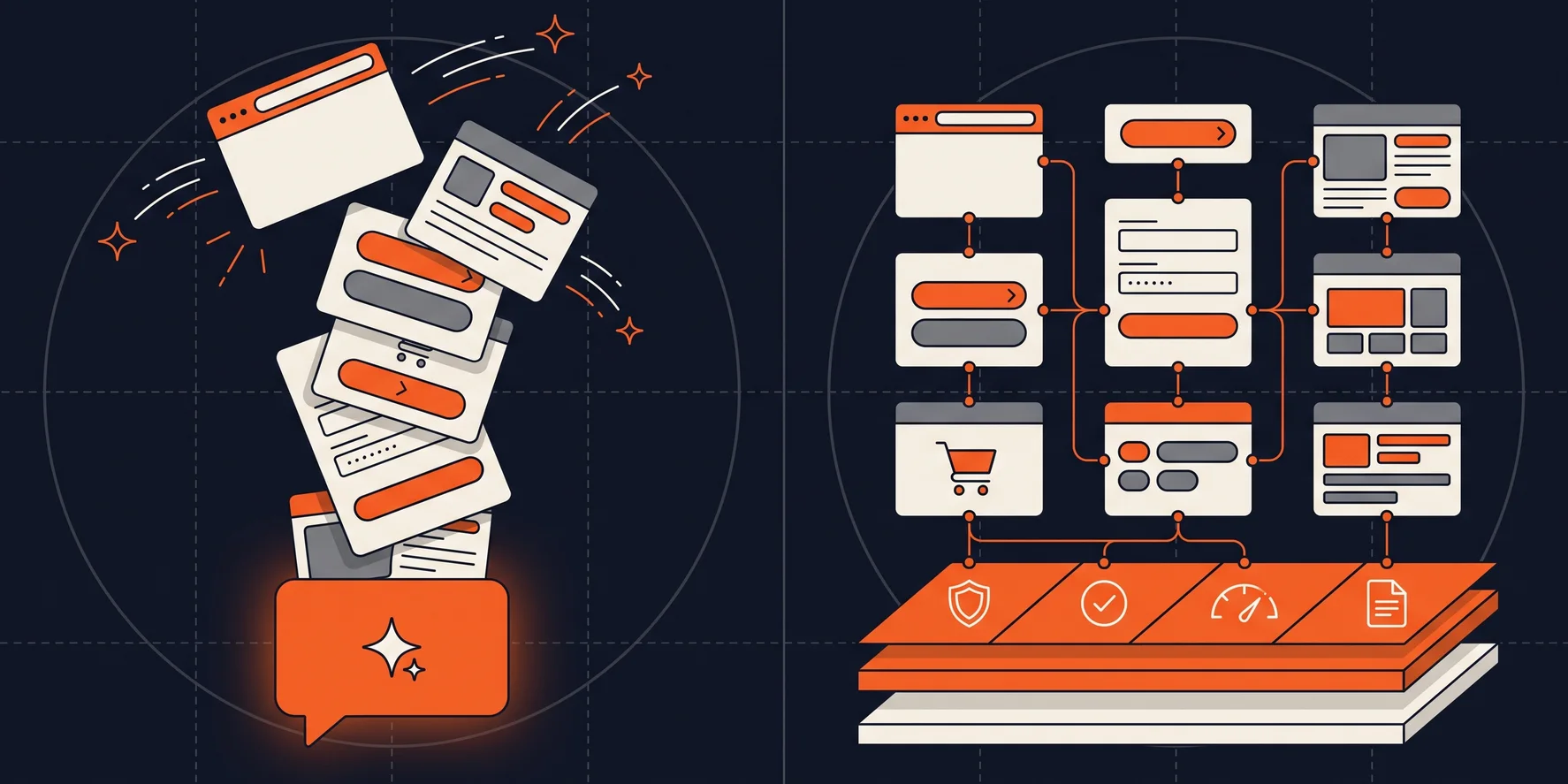
A demo and a production system are not the same thing
When you build an app to present an idea or to test it inside the company, you can simplify many things for a while. Once a few hundred or a few thousand people use the same app, the requirements change completely.
Now you have to answer new questions. What happens when several users try the same action at the same moment? How do you store the data? Who has access to which information? What happens when an integration stops working? How does the system react to data that nobody expected during development?
Then come the parts that users rarely see directly: system architecture, security, backups, monitoring, error handling, performance and the way the app changes and grows later.
For a simple prototype, it is often enough that a feature works. Business software has to work reliably and predictably, even in situations outside the ideal scenario.
One prompt does not solve business logic
In most serious software projects, writing code is not the only problem. A much larger part of the work is often understanding the process the software has to support.
Take a sales system. You need to know how the company sells, how prices are set, who approves discounts, how returns work and how data moves between systems.
In an e-commerce project, that means the ERP, courier services, payment systems, stock and several price levels. Internal business software often has user roles, access rules, reports, approval steps and many exceptions that grew over years of the company's work.
AI can speed up the build a lot when the requirements are clear. Someone still has to ask the right questions and understand what the team is actually building.
In practice, many problems in software projects start long before a developer writes the first line of code.
What happens when things go off plan?
A prototype tells you little about how a system behaves in situations nobody planned for.
A user clicks the payment button twice. The ERP sends incomplete data. The courier service goes down for a while. Two administrators edit the same product at the same time. A customer leaves the checkout after part of the order is already in the database.
Each of these cases needs a decision.
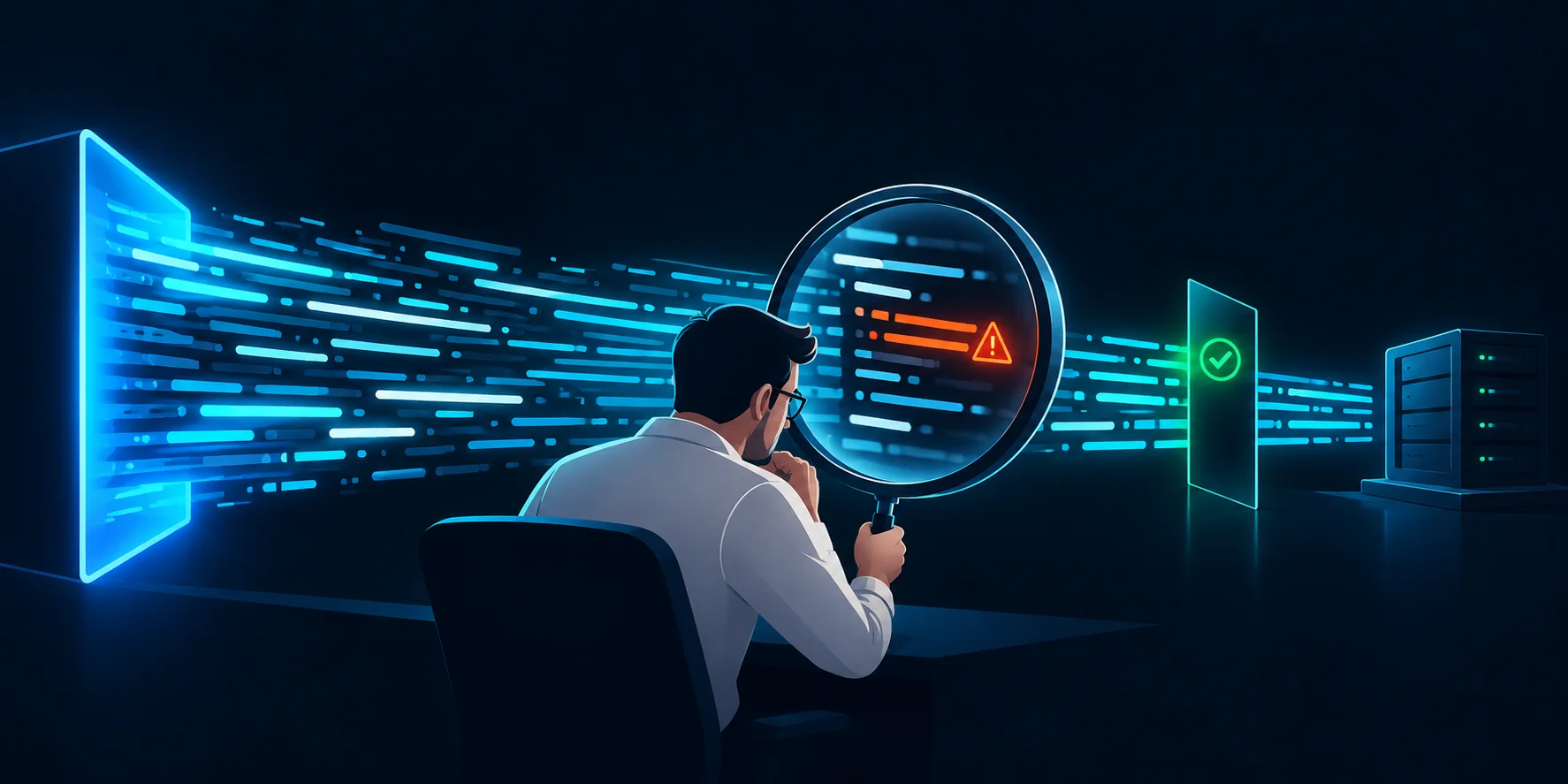
Code from AI can be fully correct for the scenario it was given. At the same time, it can miss ten other situations that show up as soon as real people use the product.
A large part of experience in software development is spotting those situations before they turn into problems in production.
Security needs special care
Some apps store user data, take payments or reach internal business information. In those apps, a mistake is no longer only a technical problem.
Wrong user permissions can let someone see data that is not meant for them. Weak authentication opens a serious security risk. Careless data storage creates problems that reach far beyond the app itself.
AI tools help write safer code and check it for possible gaps. The result still needs review and testing in the context of the specific system.
In business software, a working feature is not enough. It also has to be clear who can use it, which data it reaches and what the system allows in each situation.
Software rarely ends with the first version
People often forget one more thing: most apps keep growing after launch.
User needs change. The company adds a new service, changes how it charges or brings in a new integration. Sometimes it changes part of its business process. Sometimes the technology the app talks to changes too.
If nobody gave the first version a clear structure, every later change gets harder than it needs to be. At some point, a small new feature starts to affect several other parts of the system. The team then spends more and more time fixing the results of earlier decisions.
That is why the quality of development does not show only on launch day. It often shows much better a year or two later.
So where does AI make the biggest difference?
The biggest change is probably not that companies no longer need developers. It is how much a good team can now do in the same amount of time.
The routine part of development goes faster and prototypes appear earlier. Teams can test different solutions for less money, and they can automate part of the documentation, testing and analysis.
That leaves more time for the work that shapes the product: understanding the problem, architecture, user experience and planning how the system grows.
Companies that use AI inside a good development process get much more value from it. Companies that treat AI and development as two opposite options get less.
So why do companies still pay for software development?
Because what they need is rarely just code.
They need a system that fits the way the business already runs and connects to the other tools. It cannot break when the number of users grows, and it has to grow with the company.
AI made this process faster and easier to reach. The gap between an idea and the first working prototype is much smaller than before. When that prototype has to become part of a real business, many decisions still need experience, context and responsibility for the result.
In the coming years, we will probably talk less about whether a person or AI wrote the software. We will talk more about how well a team uses its tools to build a product that solves the problem it was made for.